The problem
Out of the box, a SIEM either misses what matters or floods the team. I wrote custom rules for the systems we actually run, and tuned the ones that produced noise.
What the rules cover
| Area | Examples of what is detected |
|---|---|
| Zimbra mail | Brute force on one account or from one IP, credential stuffing across many accounts, blocking attackers who target key mailboxes |
| Web application firewall | Blocked attacks, repeated attacks from the same source, reconnaissance |
| Microsoft 365 | New inbox and forwarding rules, mailbox permission changes, mass sending, eDiscovery searches and exports |
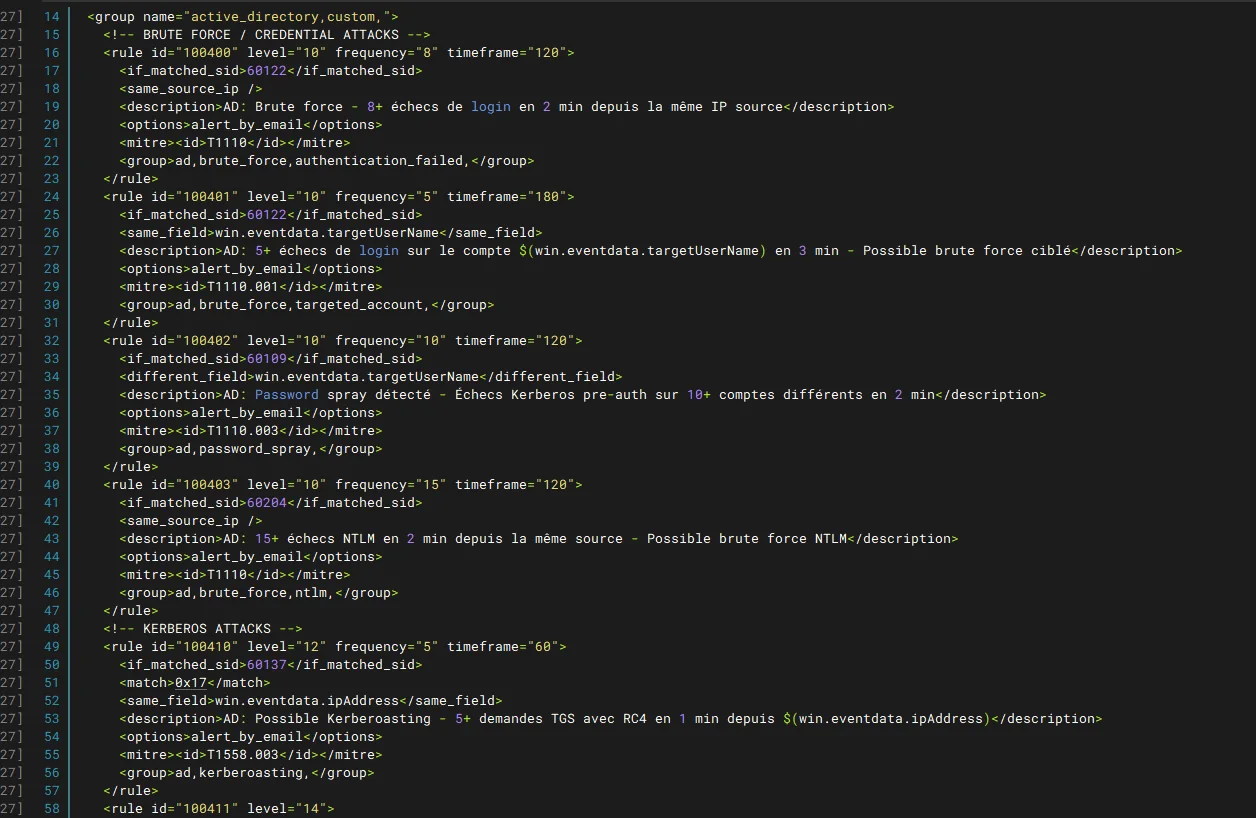
| Active Directory | Password spraying, Kerberoasting, Golden Ticket, additions to admin groups, RDP sweeps, cleared security logs |
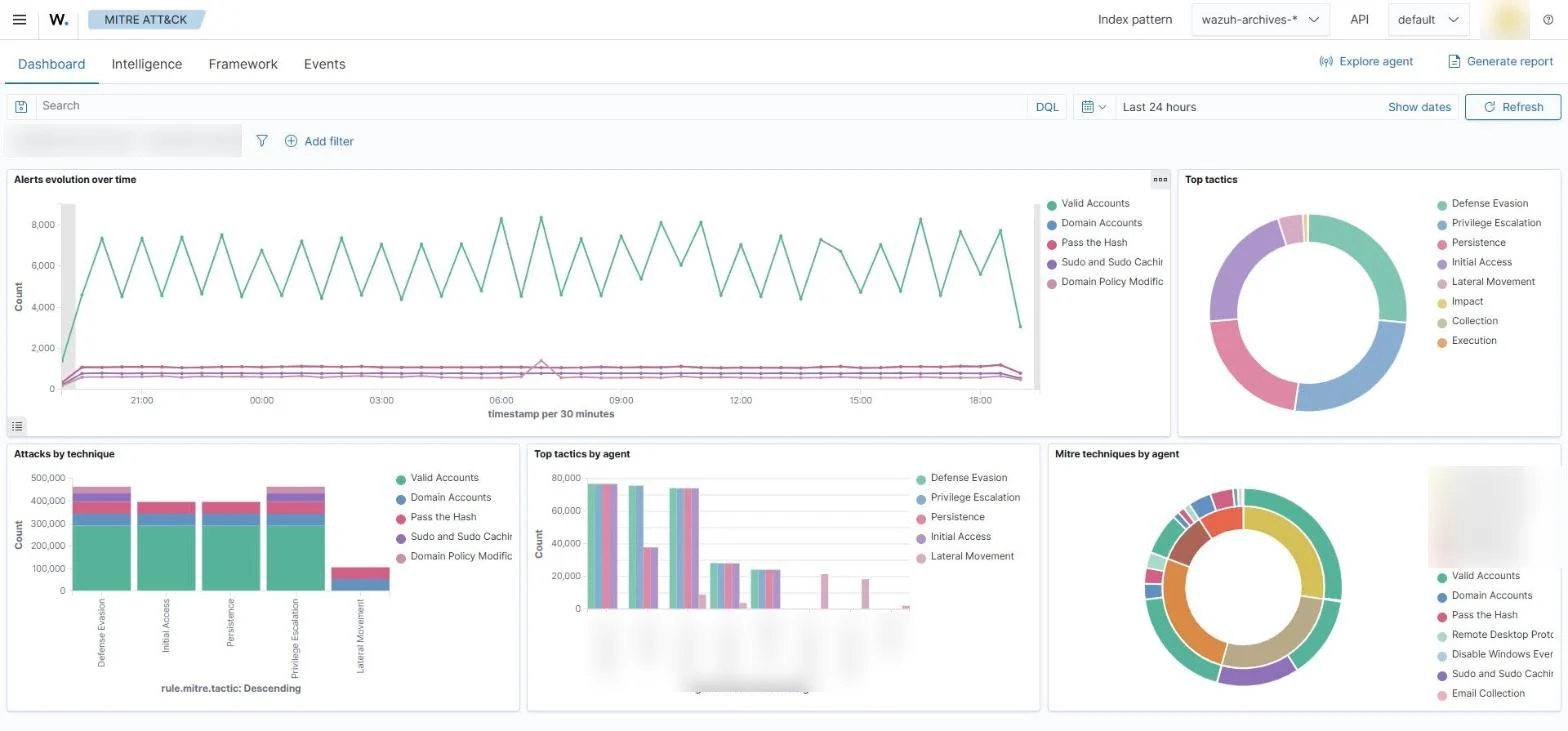
Every rule carries its MITRE ATT&CK technique. That mapping flows into TheHive, so each case shows which attack technique it is about.
Cutting the noise
Windows event 4719 (audit policy changed) fired constantly, almost always from machine accounts. I split it into two rules: from a machine account it drops to level 4 and stays in the logs; from a person it rises to level 12 and reaches the team. That single change removed thousands of alerts a day.
I use the same approach for other frequent alerts: keep the log, lower the level, and only page the team when a person or an unusual source is involved.